
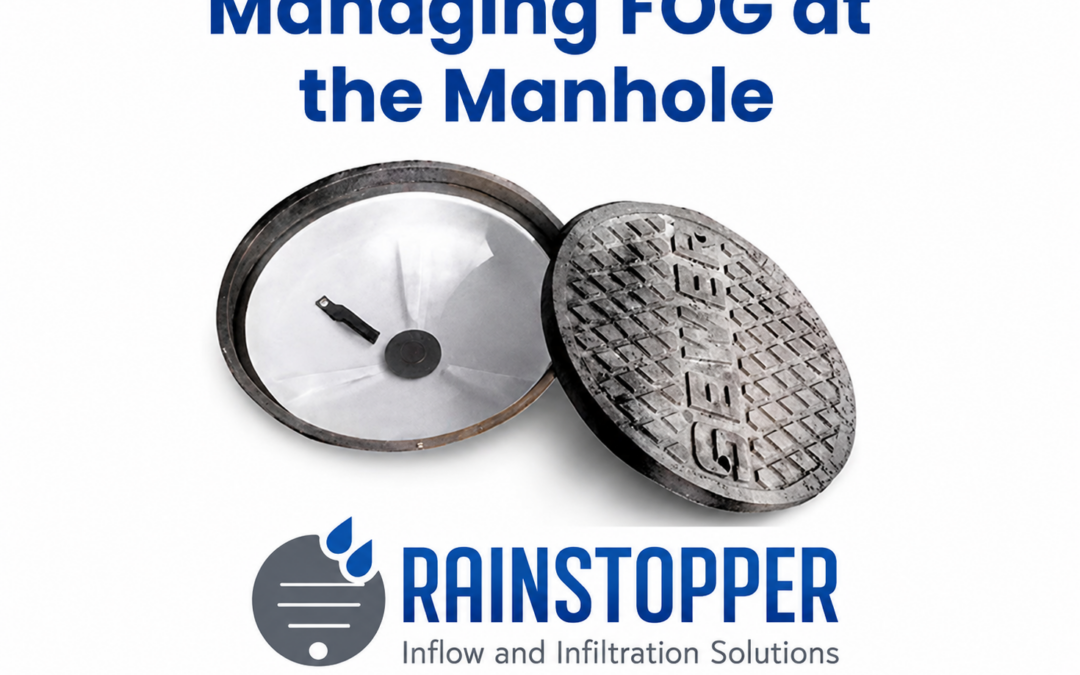
Fog at the Manhole
Restaurants, schools, and commercial kitchens rely on grease traps to help keep fats, oils, and grease (FOG) out of municipal sewer systems. When those systems are overloaded, poorly maintained, or servicing high-demand areas, the effects often show up beyond the kitchen itself.
Grease trap odors begin appearing near manholes. Grease accumulates in sewer lines. Flow restrictions, maintenance issues, and blockages can follow.
In many cases, what appears to be a general sewer odor problem may actually be connected to grease trap activity upstream.
Why Manholes Become the Symptom
Grease traps collect organic material that breaks down over time and produces gases that move through sewer lines. Those odors often escape through nearby manholes, especially in areas with multiple restaurants, institutional kitchens, or high-volume food service operations.
Municipal crews are frequently responding to the symptom at the manhole, even though the source may originate farther up the line.
At the same time, grease buildup can contribute to debris accumulation, restricted flow, and ongoing maintenance challenges throughout the collection system.
Where Manhole Inserts Fit In
HDPE manhole inserts are not a replacement for grease trap maintenance, nor are they intended to solve upstream FOG issues on their own.
However, in areas with recurring grease-related sewer problems, inserts can provide an additional layer of protection within the collection system.
Depending on the application, inserts may help by:
- Capturing debris and floating material before it moves farther downstream
- Supporting municipalities managing recurring problem locations near restaurant districts or commercial kitchen clusters
- Providing a durable and cost-effective option for high-demand environments
- Assisting with odor management and maintenance control efforts in targeted areas
The Broader Context
Many municipalities already operate FOG inspection programs and grease trap regulations. Even with strong programs in place, challenges can still develop in areas where multiple commercial kitchens discharge into the same network.
Manhole inserts are not designed to replace those upstream efforts. They are one additional tool municipalities can use to help manage recurring field conditions and reduce downstream impacts.
Rainstopper insert systems are used across municipal collection systems for inflow protection, flood mitigation, debris control, odor management, and grease-related sewer protection.
If you are dealing with recurring grease trap odors, FOG-related maintenance issues, or specific field conditions within your collection system, contact Rainstopper to discuss the application and available insert options.
Questions?
Phone: 318-687-4330
Email: Info@rainstoppercompany.com